
Projects & finishing · 4 MIN READ
Cross Stitch Bookmark Kits: What to Check Before Buying
Compare kit contents, count the usable stitching area and plan a slim, tidy finish for a bookmark that belongs inside a book.
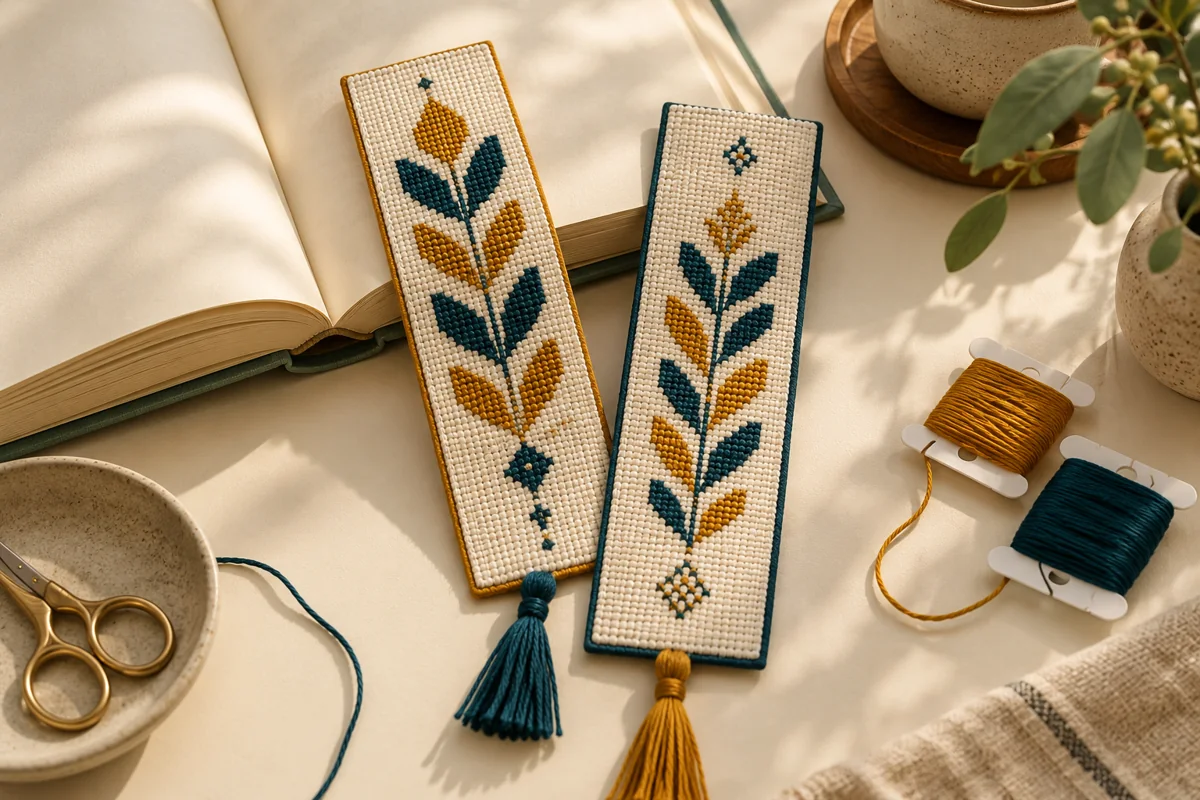
Choose a kit by its contents and finish
Cross stitch bookmark kits can look similar in a shop photograph while including very different supplies. Some provide fabric, thread, a needle and a chart; others supply a ready-edged bookmark blank or additional finishing materials. Read the individual contents list before ordering. A photograph of a tassel, hoop or completed display does not establish that the item is included.
This is a buying checklist rather than a ranking of products we have tested. Compare a kit’s actual specification with the result you want: a slim reading bookmark, a decorative hanging strip or a small gift. Those finishes need different allowances and may place different demands on the reverse of the stitching.
Check fabric count and usable dimensions
Look for both the fabric count and the dimensions of the stitching area. The overall bookmark width may include a woven border or prefinished edge that you cannot stitch through in the same way as the central fabric. Count only the usable grid when deciding whether a motif fits. Check whether the instructions state stitches, inches or centimetres.
For a hypothetical design 20 stitches wide and 70 high, 14-count Aida gives a stitched area of approximately 1.43 by 5 inches when worked over one square. That excludes seam allowances, folded ends and tassel placement. Enter the design into the fabric calculator and add the allowance for your chosen finish instead of cutting directly to the design dimensions.
Read the chart before choosing the project
A clear kit description should explain the types of stitches used and ideally show an understandable chart sample. A narrow design can still be demanding if it uses many isolated colors, tiny fractional stitches or dense backstitch. Full crosses, a small palette and repeated shapes make it easier to follow your place during short reading breaks.
Check that the key identifies each symbol distinctly and explains thread quantities or strand counts. Confirm whether instructions are available in a language you can use. If your eyesight needs a larger chart, ask about the print size or a permitted digital enlargement before buying; do not assume a downloadable PDF is included with a physical kit.
List the extras you may need
Write down which essentials are included and which you already own: a suitable needle, scissors, a way to keep thread colors identified and the materials for backing or edging. A hoop may be useful on a larger piece of fabric but awkward on a narrow ready-made blank. Follow the kit’s handling instructions rather than forcing the blank into a hoop that distorts it.
Inspect thread labels before discarding packaging. Keep colors separated throughout the project, especially when two shades look alike in artificial light. Work a few crosses using the instructed strand count and check coverage. For basic materials guidance, see our needle and thread guide.
Plan a flat reverse and secure edges
A bookmark touches paper, so the reverse and edges deserve as much planning as the front. Avoid long loose thread carries that can snag. Secure ends neatly and keep unnecessary bulk away from folded areas. Choose backing and finishing methods compatible with the fabric and the kit instructions; an adhesive should not be assumed suitable for long-term contact with books.
Leave enough material to enclose raw edges if you plan a sewn backing. Test the finished thickness in an ordinary book before choosing a decorative tassel or adding beads. A slim bookmark is usually more practical than a heavily padded piece. Wash or press only as allowed by the actual materials, then let everything dry fully before placing it between pages.
A kit alternative using supplies you own
If you already have fabric and floss, make an original small motif on cross stitch graph paper and assemble your own supply pack. Keep the drawing within the usable width and leave room for finishing. This lets you choose colors and dimensions deliberately, although it does not include the convenience or instructions of a commercial kit.
Are bookmark kits good first projects? They can be, when the chart is readable and the stitching is simple. Evaluate the stitch types and finishing work rather than relying on a beginner label. Is a small kit always quick? No: confetti stitching, repeated color changes and careful edging can take longer than the stitched dimensions suggest.
Choose an original chart from our free collection, or check your fabric measurements before you begin.
Free cross stitch patterns · Fabric calculator