
Projects & finishing · 4 MIN READ
Cross Stitch Phone Case: Plan a Design That Fits
Map a perforated case, allow for the camera opening and test a small original motif before stitching your everyday accessory.
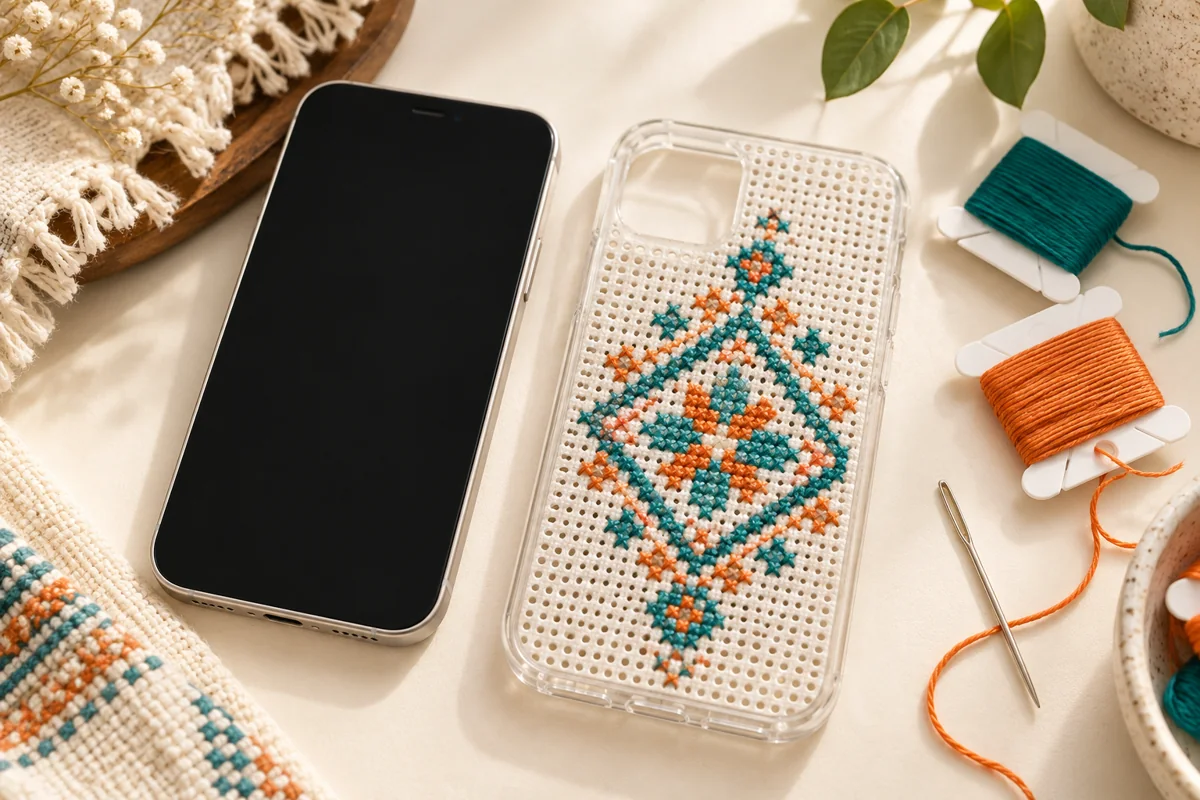
Start with a case designed for stitching
A cross stitch phone case needs a regular set of usable holes and enough space behind the stitches for the phone to fit correctly. Choose a case explicitly intended for needlework and compatible with your exact phone model. A normal protective case is not automatically suitable: drilling or cutting your own holes can damage the material, fit or protection.
Take the phone out before planning or stitching. Read the case maker’s instructions for needle size, thread choice, cleaning and refitting. This guide explains how to map an original motif; it does not establish that a handmade or modified case protects a phone against impact, moisture or heat.
Map usable stitches around the openings
Count the horizontal and vertical holes in each uninterrupted part of the case. A cross occupies the space between four corner holes, so a run of 21 holes provides 20 stitch spaces, not 21. Camera openings, raised edges and curved corners interrupt that grid. Mark those unavailable positions on paper before deciding where a motif belongs.
Draw the usable area in the grid designer or on printable graph paper. Mark the top of the case and the camera side so you cannot accidentally mirror the design when looking at the reverse. Do not count a position as usable merely because a hole is visible: the needle and thread must also pass without crowding a cutout or obstructing a feature.
Fit a small motif inside a checked rectangle
Use a compact original geometric design for a first attempt: a diamond, stripe or small initial is easier to position than a detailed photograph. Leave unstitched space around the motif, particularly near cutouts. Count the complete design, including outlines and isolated stitches, rather than measuring only the largest colored block.
For example, an uninterrupted rectangle with 21 holes across and 31 down contains 20 by 30 stitch spaces. A 12-by-18-stitch motif could leave four blank stitch columns on each side and six rows above and below if the area were perfectly rectangular. This is a hypothetical layout, not a specification for any case. Recount your own openings before using the same numbers.
Test thread thickness and the reverse
Work a small sample in an inconspicuous usable part of the case, following the manufacturer’s strand guidance. Several crosses can share a hole, so the first isolated stitch cannot show how crowded the finished area will become. Use gentle, consistent tension. Pulling hard can distort a flexible case or abrade the thread against the hole edges.
Keep the reverse as flat as the case instructions require and avoid bulky knots. Do not add a fabric lining, adhesive or protective layer unless the case maker permits it and the phone still seats correctly. A thread color shown by a digital designer is a generic screen color; match physical floss yourself rather than treating the preview as a guaranteed brand shade.
Stitch in sections and inspect before refitting
Follow the chart from a reliable reference point and check your count after each short row. Keep the upper legs of the crosses consistent for an even appearance. Secure each color before moving to a distant area instead of dragging a long loose carry across the reverse. Trim ends carefully without nicking the case or neighboring stitches.
When stitching is complete, remove the needle and all loose scraps. Inspect the inside for protruding ends, rough spots or excess thickness, then follow the maker’s instructions for reinstalling the phone. Check that the camera, buttons, ports and case edges remain clear. Stop using the stitched arrangement if it prevents the phone from seating normally.
Care and common questions
Can I stitch on any clear phone case? No. A clear surface is not the same as a regular needlework grid, and an ordinary case may have no intended space for thread. Look for a purpose-made perforated product rather than adapting an unsuitable shell.
Will a stitched case work with wireless charging? That depends on the phone, case and any added material. Check the manufacturers’ compatibility information instead of assuming a thin thread layer makes no difference. For cleaning, use only methods permitted for both the case and embroidery thread. Never soak the phone, and keep moisture away from it while caring for the empty case.
Choose an original chart from our free collection, or check your fabric measurements before you begin.
Free cross stitch patterns · Fabric calculator